How Long Has Toyota Paddle Shifters Been Around? A Complete History
Paddle shifters have been part of Toyota’s performance and everyday driving technology for more than two decades, with their use expanding across different vehicle types over time. Toyota began offering paddle-shift controls in selected production vehicles in the early 2000s, although the exact introduction date depends on the model and market. These controls let drivers change gears with small paddles behind the steering wheel without using a clutch pedal.
From a mechanical standpoint, paddle shifters mark an important step in the evolution of automatic transmissions. They give drivers more control over gear selection while keeping the ease of an automatic gearbox. Today, Toyota uses this feature in selected sports cars, performance models, hybrids, and other vehicles, depending on the model year and trim.
Exact Timeline of Toyota Paddle Shifters
Toyota’s paddle-shifter history follows the wider growth of electronic transmission controls. Early systems focused on performance driving, while newer versions offer more control in everyday traffic and on winding roads.
When Toyota First Introduced Paddle Shifters
Toyota began using steering-wheel-mounted shift controls in selected production models during the early 2000s. The exact first model can be difficult to establish because Toyota introduced different transmission systems in different markets and model years.
One important distinction is the difference between paddle shifters and a manual shift gate. A manual shift gate lets a driver move a gear selector forward or backward. Paddle shifters place separate controls behind the steering wheel, allowing quick gear changes without moving a hand away from the wheel.
How the Technology Evolved Over Time
Toyota’s early paddle-shift systems were closely linked to performance-oriented driving. As electronic transmissions improved, the technology became easier to use and more adaptable to daily driving.
Modern systems use electronic signals to request a gear change. A transmission control unit, or TCU, is the electronic controller that manages gear selection and shifting. It checks vehicle speed, engine speed, throttle input, and other conditions before allowing a requested shift.
Why There Is No Single Date for Every Toyota
Toyota sells vehicles with different transmissions across many markets. Some models use conventional automatic gearboxes, while others use continuously variable transmissions (CVTs), hybrid power-split systems, or dual-clutch-style designs in selected applications.
These systems do not all use paddle shifters in the same way. Some paddles select actual gears, while others control simulated gear steps or adjust regenerative braking in a hybrid. Therefore, the introduction date depends on the specific vehicle and the function of its paddles.
Toyota Models That Have Used Paddle Shifters
Toyota has offered paddle shifters in selected models, but availability varies by year, trim, transmission, and market. A vehicle name alone does not guarantee that every version includes them.
Sports Cars and Performance Models
Performance vehicles are a natural fit for paddle shifters because drivers often want fast, predictable control over gear selection. The Toyota 86 and GR86, for example, have offered paddle-shift controls with automatic transmission versions in certain model years.
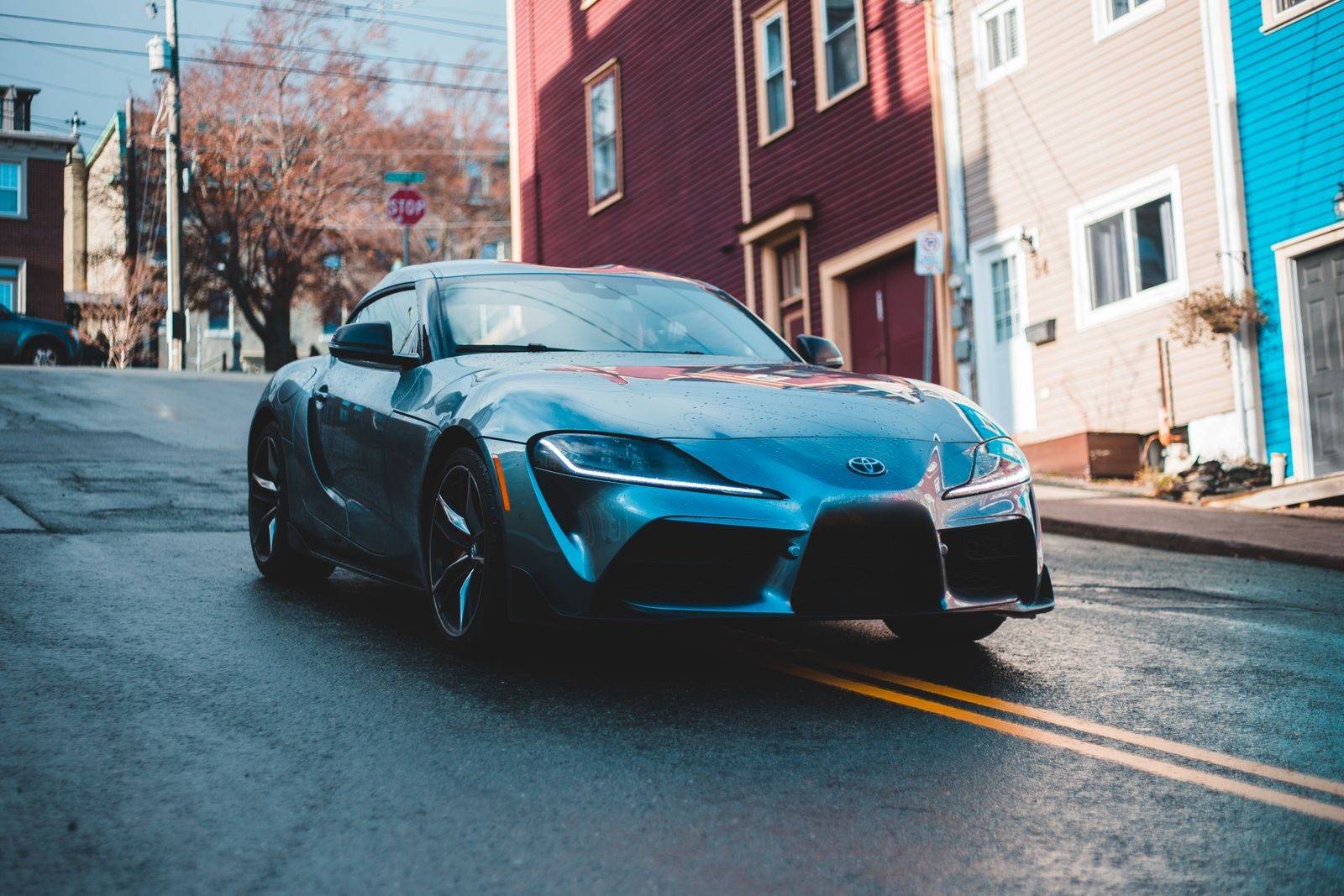
The Supra has also offered steering-wheel-mounted shift paddles in applicable automatic versions. These controls can help drivers select a lower gear before a corner or hold a suitable gear during spirited driving, subject to the transmission’s safeguards.
Sedans and Everyday Passenger Cars
Some Toyota sedans have offered paddle shifters in selected trims. Their purpose is often less about track performance and more about giving the driver extra control during overtaking, hill climbing, or downhill travel.
Availability can change between model generations. Buyers should check the owner’s manual and equipment list for the exact year and trim rather than assuming the feature is standard.
Hybrids and Electrified Vehicles
Some Toyota hybrid models use steering-wheel paddles to adjust regenerative braking or select simulated gear steps, depending on the vehicle. Regenerative braking is a system that uses the electric motor to recover some movement energy and turn it into electrical energy for the battery.
These paddles may not operate like the gear selectors in a conventional automatic transmission. In some hybrids, the paddles adjust deceleration rather than commanding a physical gear change. That difference matters when comparing models or learning how to use the controls.
How Toyota Paddle Shifters Actually Work
Paddle shifters may look simple, but they rely on several electronic and mechanical systems working together. The paddles send requests; the vehicle’s control systems decide how and when to carry them out.
Electronic Signals and Gear Selection
When a driver pulls the right paddle, the system typically requests an upshift. Pulling the left paddle typically requests a downshift. The precise function may differ by vehicle, so the owner’s manual remains the best guide.
The paddles send electrical signals to the transmission control system. The controller then checks whether the requested change is safe and suitable for current operating conditions.
Engine Speed and Transmission Protection
Engine speed is measured in revolutions per minute (RPM). A transmission controller uses RPM, road speed, and other data to prevent an unsafe shift.
For example, a downshift at high road speed could push the engine beyond its permitted speed range. To prevent this, the system may reject the request or delay the shift until conditions are suitable.
Manual Mode Versus Full Automatic Mode
Many Toyota vehicles let drivers use paddle shifters while the transmission is in a designated manual or sport mode. Other systems allow temporary manual requests while remaining in automatic operation.
In manual mode, the driver has more influence over gear choice, but the system usually retains protective controls. It may shift automatically near a limit or refuse a command that could damage the engine or transmission.
Benefits of Toyota Paddle Shifters in Daily Driving
Paddle shifters are not only for racing or high-speed driving. When used correctly, they can make certain everyday driving situations easier and more controlled.
Better Control on Hills and Downhill Roads
A lower gear can help a vehicle maintain speed on a long descent. Engine braking occurs when the engine and transmission help slow the vehicle after the driver lifts off the accelerator.
Using a lower gear can reduce the need for constant brake pressure. However, drivers must still use the brakes as needed and follow the vehicle’s guidance, especially on steep or slippery roads.
More Responsive Overtaking
When extra acceleration is needed, a downshift can help the engine reach a more useful power range. This can reduce the delay that sometimes occurs when an automatic transmission decides which gear to select.
Drivers should only overtake when visibility, road conditions, and traffic allow a safe manoeuvre. Paddle shifters do not replace good judgment or safe following distance.
A More Engaging Driving Experience
Paddle shifters allow drivers to make gear requests without taking their hands far from the steering wheel. This can make a compatible vehicle feel more involving on a winding road or during controlled performance driving.
Still, paddles do not turn every automatic transmission into a true manual gearbox. The clutch operation, gear selection logic, and mechanical design remain controlled by the vehicle’s transmission system.
Paddle Shifters Versus Traditional Gear Selectors
Both systems allow a driver to influence gear choice, but they differ in position, operation, and ease of use. The best option depends on how the vehicle is driven and which transmission it uses.
| Feature | Paddle Shifters | Manual Shift Gate |
|---|---|---|
| Location | Behind the steering wheel | Centre console |
| Operation | Pull a paddle | Move the selector |
| Hand movement | Minimal | Requires reaching for the selector |
| Typical use | Quick gear requests | Manual selection through the gear lever |
| Availability | Selected models and trims | Depends on transmission design |
Paddle shifters can be convenient when the driver wants to keep both hands near the steering wheel. A shift gate may feel more familiar to drivers who prefer using a central selector.
Neither design automatically provides better performance. Actual shift speed and response depend on the transmission, software, engine, and driving conditions.
Reliability and Maintenance of Paddle Shifters
Paddle shifters are generally simple controls, but their performance depends on the electrical system and transmission. Most do not require a separate maintenance schedule beyond the checks recommended for the vehicle.
Common Causes of Paddle-Shifter Problems
A paddle may stop responding because of a faulty switch, a damaged steering-wheel wiring connection, an electrical issue, or a transmission control fault. In some vehicles, a selected driving mode may also disable or limit paddle operation.
If the transmission warning light appears, shifts become harsh, or the vehicle enters a reduced-power mode, the issue may extend beyond the paddle itself. Replacing a switch without diagnosis may not solve the underlying fault.
Basic Checks Before Seeking Repairs
First, check the owner’s manual to confirm the correct operating mode and paddle function. Some vehicles require a particular selector position before manual gear requests become available.
Next, note whether both paddles fail or only one. Check for warning messages and any changes in normal shifting behaviour. A professional diagnostic scan may be needed if the controls remain unresponsive or transmission warnings appear.
Avoid removing the steering wheel or nearby components without the correct service procedure. The steering wheel may contain an airbag, which can cause serious injury if handled incorrectly.
Frequently Asked Questions About Toyota Paddle Shifters
How long have Toyota paddle shifters been around?
Toyota has used paddle-shift controls in selected production vehicles since the early 2000s. The exact starting year depends on the model, transmission, trim, and market.
Did Toyota invent paddle shifters?
No. Steering-wheel-mounted gear controls were developed and used by multiple manufacturers. Toyota adopted the technology for selected vehicles as electronic transmission systems became more common.
Do all Toyota automatic cars have paddle shifters?
No. Paddle shifters are available only on selected models and trims. Some vehicles use a shift gate, while others rely entirely on automatic gear selection.
Do Toyota paddle shifters change real gears?
That depends on the vehicle. In many conventional automatic models, they request actual gear changes. In some hybrids and CVT-equipped vehicles, they may select simulated ratios or adjust regenerative braking instead.
Can using paddle shifters damage a Toyota transmission?
Normal use according to the owner’s manual should not damage a properly functioning system. The vehicle’s electronics usually block shifts that could cause engine overspeed or other unsafe conditions.
Are paddle shifters useful in traffic?
They can be useful in selected situations, such as approaching a hill or preparing for a safe overtake. In ordinary stop-and-go traffic, automatic mode is often more convenient.
Can paddle shifters be added to a Toyota?
Retrofitting may be possible on some models, but it depends on the steering wheel, wiring, transmission, control modules, and factory software. Compatibility should be confirmed before buying parts or attempting modifications.
Do paddle shifters improve fuel economy?
Not automatically. Fuel economy depends on speed, acceleration, road conditions, and gear selection. Poorly timed shifts can increase fuel use, while sensible driving can help maintain efficiency.
Final Thoughts on Toyota Paddle Shifters
Toyota paddle shifters have been around since the early 2000s in selected vehicles, giving drivers more control over automatic transmission behaviour. Their use has expanded as electronic transmission systems have become more advanced, but availability and function still vary by model.
The key point is that paddle shifters are controls, not a separate transmission type. Some command real gear changes, while others manage simulated ratios or regenerative braking. Check the exact model year, trim, transmission, and owner’s manual to understand when the feature first appeared in a particular Toyota and how it works in that vehicle.