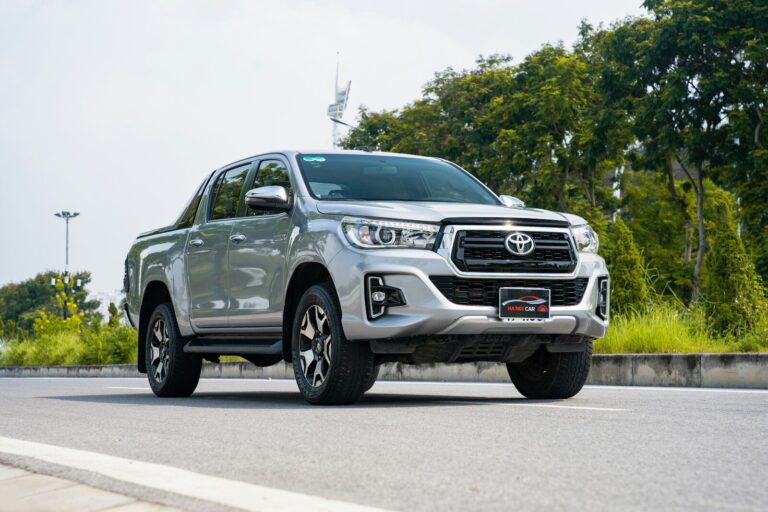
How Much Does a Toyota RAV4 Weigh? Complete Weight Guide
In automotive service, vehicle weight is one of the first details worth checking before choosing tires, loading cargo, or planning a tow. The Toyota RAV4 typically weighs around 3,300 to 4,300 pounds, depending on its model year, trim, engine, and powertrain. Older and lighter versions can fall outside this range, so the exact factory specification matters.
The term curb weight means the weight of a vehicle with its standard equipment and operating fluids, but without passengers or cargo. It gives you a useful starting point when comparing compact SUVs, estimating payload, or checking whether a vehicle can carry a heavy load.
Not every RAV4 weighs the same. A front-wheel-drive model may be lighter than an all-wheel-drive version. Hybrid and plug-in hybrid models also carry extra electrical components and batteries, which can add weight.
This guide explains RAV4 weight ranges, the differences between powertrains, and how vehicle weight affects everyday driving, fuel economy, braking, and towing.
How Much Does a Toyota RAV4 Weigh by Model?
The weight of a RAV4 depends on its generation, trim, and equipment. A basic model often weighs less than a version with extra safety systems, larger wheels, all-wheel drive, or an electrified powertrain.
Typical curb weight across recent model years
Recent RAV4 models generally fall between the mid-3,000-pound range and the mid-4,000-pound range. Plug-in hybrid versions can weigh more because they use a larger battery and additional electrical hardware.
The exact figure depends on the version sold in each market. These approximate ranges help with general comparisons, but they are not a substitute for the specifications of your exact vehicle.
The table uses broad estimates for common configurations rather than claiming that every trim has the same weight.
| Model type | Approximate curb weight | Approximate metric weight |
|---|---|---|
| Older RAV4 models | 2,700–3,500 lb | 1,225–1,588 kg |
| Recent gasoline models | 3,400–3,700 lb | 1,542–1,678 kg |
| Recent hybrid models | 3,500–3,900 lb | 1,588–1,769 kg |
| Plug-in hybrid models | 4,200–4,550 lb | 1,905–2,064 kg |
These figures cover different generations and markets, so the ranges may overlap. For instance, a recent hybrid can weigh less than a heavily equipped plug-in hybrid. Always check the model year, trim, and drivetrain before using a weight figure for towing or loading.
Why trim levels change the total vehicle weight
A trim is a version of a vehicle with a particular set of features. A basic trim may use smaller wheels and fewer comfort features, while a premium trim may add powered seats, a larger sunroof, and other equipment.
All-wheel drive can also add weight through extra drive components. A larger battery, electric motors, and related cooling parts increase the mass of hybrid models. Even within the same model year, these differences can affect the final number.
Understanding Curb Weight and Gross Vehicle Weight
Two weight terms matter most when checking an SUV’s load limits. Curb weight describes the vehicle in its ready-to-drive condition, while gross vehicle weight rating, or GVWR, is the maximum permitted total weight when the vehicle is loaded.
What curb weight includes
Curb weight includes the vehicle’s standard equipment and operating fluids, such as engine oil and coolant. Depending on the specification standard, it may also assume a full fuel tank. It does not normally include passengers or luggage.
This figure helps you compare vehicles on a like-for-like basis. It also gives you a starting point for calculating how much additional weight the SUV can carry.
What GVWR means in practice
GVWR is the maximum allowed weight of the fully loaded vehicle. It includes the vehicle itself, occupants, cargo, and other items carried inside it. The exact rating varies by model and equipment.
For a practical example, imagine an SUV with a curb weight of 3,600 pounds and a GVWR of 4,800 pounds. The difference is 1,200 pounds. That difference represents the theoretical payload available for occupants and cargo under those specifications.
The next table uses that example to show how the main weight terms relate to each other.
| Weight term | Meaning | Example |
|---|---|---|
| Curb weight | Vehicle ready to drive | 3,600 lb |
| GVWR | Maximum loaded vehicle weight | 4,800 lb |
| Payload | Difference between GVWR and curb weight | 1,200 lb |
These numbers are illustrative, not the ratings for every RAV4. Real payload capacity can vary with options and factory equipment. The door-jamb certification label and owner’s manual are the right places to confirm the limits for a specific vehicle.
Never treat the full payload allowance as cargo capacity alone. Passengers, luggage, accessories, and any other carried load all count toward the vehicle’s weight limit.
How Hybrid Systems Affect Toyota RAV4 Weight
Hybrid systems combine a gasoline engine with one or more electric motors. The battery stores electrical energy, while the motors help move the vehicle. This setup can improve fuel economy, especially in stop-and-go traffic, but it adds components.
Gasoline models versus standard hybrids
A gasoline RAV4 has a conventional engine and drivetrain. A standard hybrid adds a battery pack, electric motors, power electronics, and related wiring. The extra parts can increase curb weight, though the final difference depends on the design and trim.
Hybrid models may also use regenerative braking. This system turns some of the vehicle’s movement into electrical energy during deceleration. It helps recharge the battery and can reduce the work done by the friction brakes.
Why plug-in hybrids can weigh more
A plug-in hybrid has a larger battery than a standard hybrid and can travel farther using electric power alone. That larger battery adds weight, along with its protective housing and cooling system.
For one recent model-year example, published specifications list plug-in hybrid versions weighing roughly 4,435 to 4,540 pounds, depending on trim. That is noticeably heavier than many gasoline versions.
Comparing powertrains and their trade-offs
The right choice depends on how you drive. A gasoline model may be a sensible fit for drivers who want a simpler powertrain. A standard hybrid can reduce fuel use in urban traffic, while a plug-in hybrid can offer electric driving for shorter trips when charged regularly.
The weight difference is only one factor. Purchase price, fuel use, charging access, maintenance, and local driving conditions all matter when comparing the options.
What Vehicle Weight Means for Daily Driving
Vehicle weight affects how an SUV accelerates, stops, turns, and uses fuel. The effect is not the same in every situation. Tire grip, engine power, road surface, and suspension design also play major roles.
Acceleration and engine performance
A heavier vehicle needs more force to gain speed at the same rate. This follows a basic physics rule: greater mass requires more force for the same acceleration.
You may notice this when joining a fast road with a full load of passengers and bags. The engine may need to work harder, especially when climbing a steep hill. A hybrid can use its electric motor to help provide strong initial pull, depending on its design.
Braking distance and tire grip
A moving vehicle carries kinetic energy, which is the energy it has because it is moving. At the same speed, a heavier vehicle carries more kinetic energy than a lighter one. The brakes and tires must manage that energy when the vehicle slows down.
This does not mean a heavier RAV4 will always stop farther than every lighter SUV. Tire condition, brake design, road grip, and reaction time all matter. Still, extra passengers and cargo increase the load that the braking system must handle.
Keep tires at the recommended pressure and maintain the brakes. Avoid placing heavy objects high in the cabin, as this can raise the center of gravity and affect handling.
Fuel economy and road conditions
Extra weight can increase energy use, especially during repeated acceleration. City driving often makes this effect more noticeable because the vehicle must keep speeding up and slowing down.
On a highway, aerodynamic drag—the force of air pushing against a moving vehicle—can become a major source of energy loss. At steady speed, weight may have less influence on fuel use than it does in stop-and-go traffic, although hills and rolling resistance still matter.
How to Convert RAV4 Weight Between Units
Vehicle specifications may use pounds or kilograms, depending on the market. Knowing how to convert the figures makes it easier to compare different versions and understand load ratings.
Pounds, kilograms, and metric tons
One kilogram equals approximately 2.205 pounds. To convert pounds into kilograms, divide the number of pounds by 2.205. To convert kilograms into pounds, multiply by about 2.205.
For example, a vehicle weighing 3,600 pounds weighs about 1,633 kilograms. The calculation is useful when comparing a specification sheet that lists imperial units with one that uses metric units.
The following conversions are rounded to make them easier to use for quick estimates.
| Pounds | Kilograms | Metric tons |
|---|---|---|
| 3,300 lb | 1,497 kg | 1.50 t |
| 3,500 lb | 1,588 kg | 1.59 t |
| 3,700 lb | 1,678 kg | 1.68 t |
| 4,000 lb | 1,814 kg | 1.81 t |
| 4,300 lb | 1,950 kg | 1.95 t |
| 4,500 lb | 2,041 kg | 2.04 t |
These conversions are handy for reading brochures and comparing vehicles. However, do not confuse curb weight with GVWR or maximum towing capacity. They describe different limits and cannot be used interchangeably.
How to Find Your Exact RAV4 Weight
A broad estimate is useful for research, but an exact figure is better when you plan to carry a heavy load, use a trailer, or transport the vehicle.
Check the owner’s manual and door label
Start with the owner’s manual for the correct model year. Look for the specifications section, which may list curb weight, GVWR, and other load limits. Make sure the manual matches the vehicle’s powertrain and trim.
Next, inspect the certification label on the driver’s door frame or door opening. It usually lists the vehicle’s GVWR and front and rear axle weight ratings. An axle rating is the maximum permitted load on a specific axle.
The label may not list curb weight, so use the manual or a matching factory specification for that figure. If the vehicle has been modified, its actual weight may differ from the original published value.
Use a vehicle scale when accuracy matters
A certified vehicle scale can measure the actual weight of the SUV as it sits. This is useful if you have added accessories, installed a tow hitch, or regularly carry heavy equipment.
For the most useful result, weigh the vehicle in the same condition in which you plan to use it. If you want to know the loaded weight for a trip, include the passengers, luggage, and other items that will be on board.
A scale reading can also reveal whether your planned load puts the vehicle close to its limits. Never assume that a vehicle is within its ratings just because it looks level or the suspension does not sag.
Key Factors That Change the Final Weight
Several details can make two RAV4 vehicles weigh different amounts, even when they share the same model year. The most useful factors to check are the drivetrain, battery system, factory options, and added equipment.
Factory equipment and accessories
Larger wheels, powered seats, roof rails, and other features can add weight. Aftermarket equipment—parts fitted after the vehicle leaves the factory—can add more. Roof racks, cargo boxes, steel accessories, and heavy protective gear are common examples.
A few small accessories may make little difference on their own. However, many additions can reduce the amount of weight left for passengers and cargo.
Passenger loads and luggage
Four adults and their bags can add several hundred pounds to the vehicle. That load affects payload, braking, tire loading, and handling. Keep heavy luggage low and secure it so it cannot move during a sudden stop.
Use the manufacturer’s load limits rather than judging capacity by available cabin space. An SUV can have room for more cargo than it can safely carry.
The main weight factors are easy to compare once you separate the vehicle’s original mass from everything added later.
| Factor | Effect on weight | What to check |
|---|---|---|
| Drivetrain | Extra drive parts may add weight | FWD or AWD specification |
| Hybrid battery | Adds electrical system mass | Hybrid type and trim |
| Factory options | Can raise curb weight | Original equipment list |
| Roof accessories | Increase loaded weight | Accessory weight limit |
| Passengers and cargo | Use available payload | GVWR and payload rating |
The key point is that curb weight is only the starting figure. The weight of the vehicle on a real journey rises as people, bags, and accessories are added. Always leave enough capacity for the entire load.
Frequently Asked Questions About RAV4 Weight
These common questions cover the figures drivers most often need when comparing SUVs, planning trips, or checking load limits.
Is a Toyota RAV4 considered a heavy SUV?
The RAV4 is a compact SUV. Many versions weigh less than larger three-row SUVs and full-size utility vehicles. However, a plug-in hybrid can weigh more than a basic gasoline version because of its larger battery and electrical equipment.
How much does a RAV4 weigh in kilograms?
Many recent gasoline versions weigh roughly 1,540 to 1,680 kilograms. Hybrid models may be heavier, while plug-in hybrid versions can approach or exceed 2,000 kilograms. The exact figure depends on the model year, trim, and market.
Does all-wheel drive increase vehicle weight?
It can. All-wheel drive uses additional components to send power to more than two wheels. The weight difference depends on the design, so compare the official specifications for the two versions rather than relying on a single fixed estimate.
Does vehicle weight affect towing capacity?
Yes, but curb weight alone does not determine towing capacity. The engine, transmission, cooling system, brakes, chassis, and factory towing equipment all matter. You must also stay within the vehicle’s trailer rating, GVWR, axle ratings, and any applicable tongue-weight limit.
Where can I find the official weight for my SUV?
Check the owner’s manual and the manufacturer’s specifications for your exact model year and trim. The certification label on the driver’s door frame provides important load ratings. A vehicle scale can measure its actual weight with its current equipment and cargo.
Is curb weight the same as payload?
No. Curb weight is the weight of the vehicle in its specified ready-to-drive condition. Payload is the additional weight it can carry within its permitted loaded limit. Passengers and cargo use up that available capacity.
Final Thoughts on Toyota RAV4 Weight
So, how much does a Toyota RAV4 weigh? For many recent models, a useful estimate is 3,400 to 3,900 pounds for gasoline and standard hybrid versions, while plug-in hybrids can weigh around 4,200 to 4,550 pounds. Older models may be considerably lighter.
The exact number depends on the model year, trim, drivetrain, and equipment. For a reliable answer, use the factory specification for your particular vehicle rather than relying on a general range.
Remember these three points:
- For comparisons: Use curb weight to compare similar models.
- For loading: Check GVWR and payload before adding passengers or cargo.
- For towing: Follow the specific vehicle’s towing and load ratings.
Vehicle weight is more than a number on a specification sheet. It affects how the SUV accelerates, brakes, handles, and uses fuel. Understanding it helps you make safer choices and get the most from your RAV4.