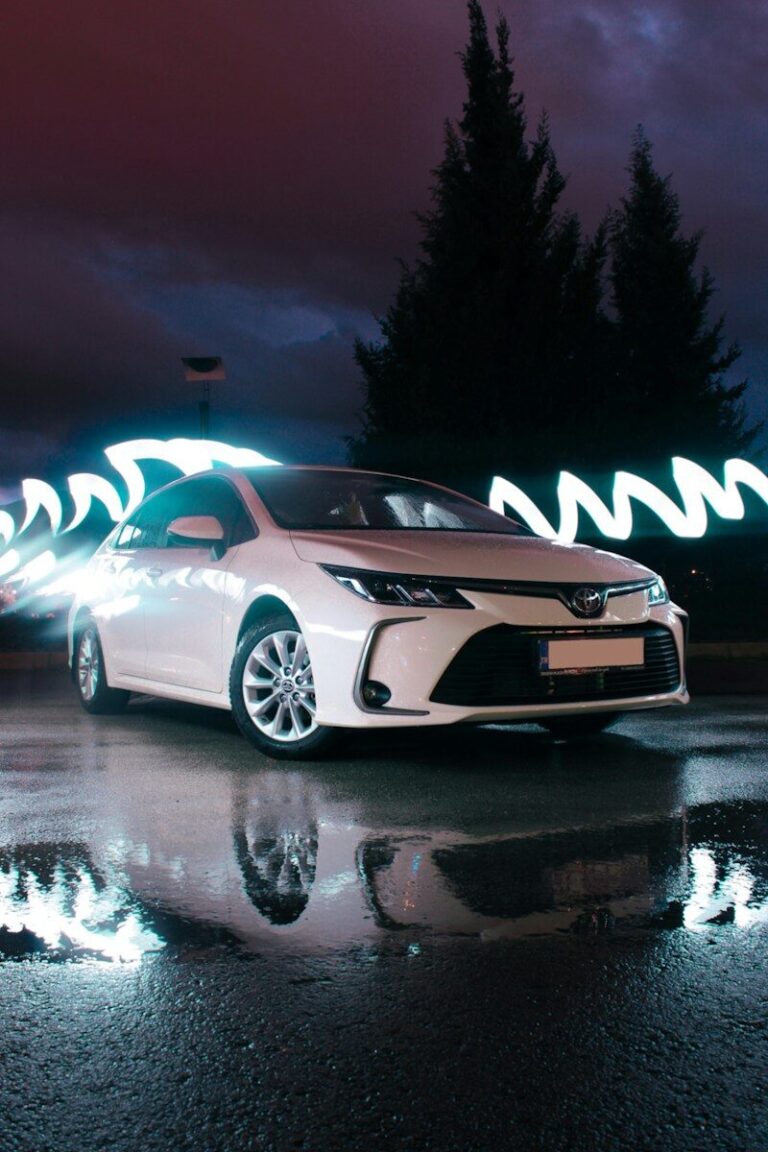
Can a Toyota Hybrid Jump Start Another Car? Safety Guide
In automotive electrical work, one rule matters most: a hybrid car’s small 12-volt battery is not the same as its high-voltage traction battery. A Toyota hybrid may be able to jump-start another car, but it is not safe to assume every model can do so. Many hybrids are designed to receive a jump-start when their own 12-volt battery is weak, not to supply the high current another car needs to crank its engine.
The key issue is the electrical system, not just the size of the vehicle. A hybrid can have a large battery pack and still lack a suitable 12-volt charging system for helping another car. Before connecting jumper cables, check the owner’s manual for the exact model and year.
If the manual does not approve using the hybrid as a donor vehicle, use a dedicated jump starter or a suitable conventional vehicle instead. This simple choice can help protect costly electronic parts and prevent a roadside problem from becoming a major repair.
Essential Tools Required for This Job
Before trying to help another vehicle, check what equipment you have and whether the hybrid is approved for the task. The right tools can reduce electrical risks, but no tool makes an unsupported connection safe.
Jumper cables and battery clamps
Jumper cables are insulated wires with clamps at each end. They transfer electrical power between two vehicles. For ordinary jump-starting, choose good-quality cables with suitable wire thickness and secure, undamaged clamps.
However, thick cables do not make a Toyota hybrid a suitable donor. The vehicle’s design and the manufacturer’s instructions matter more than cable size.
A portable jump starter
A portable jump starter is a compact battery pack that supplies the short burst of current needed to start a vehicle. It can be a better option when the hybrid cannot safely supply power to another car.
Choose a unit rated for the engine size and battery type you need to support. Follow its instructions, including the correct clamp order and any built-in safety checks.
A digital multimeter
A digital multimeter measures voltage, resistance, and other electrical values. It can help you check a conventional 12-volt battery before attempting a jump-start.
A healthy, fully charged 12-volt lead-acid battery often reads around 12.6–12.8 volts at rest. A lower reading may suggest a low charge, but voltage alone cannot prove that a battery is healthy under load.
OEM and Replacement Parts Needed for Safe Jump-Starting
OEM means “original equipment manufacturer,” the company that built the vehicle or supplied its original parts. OEM instructions are especially important for hybrids because their electrical layouts can differ from those of standard petrol cars.
Understand the two battery systems
A Toyota hybrid may have two separate battery systems. The 12-volt auxiliary battery powers control units, lights, locks, and other electrical equipment. The high-voltage traction battery supplies energy for the electric drive system.
The hybrid may also use a DC-to-DC converter, an electronic device that changes high-voltage power into the lower voltage needed by the 12-volt system. This does not mean the car can safely provide jump-start current to another vehicle.
Check the approved connection points
Some hybrid models have a designated positive jump terminal under the hood and a specific ground point. These points are often intended to receive external power when the hybrid’s auxiliary battery is discharged.
Do not assume that the same terminals can be used in reverse. A connection approved for receiving power may not be approved for supplying it.
Before connecting anything, check the owner’s manual for the exact model year and powertrain. If the manual does not clearly approve donor use, do not proceed.
The following distinctions help explain why the correct connection method matters.
| Component | Main purpose | Key limitation |
|---|---|---|
| 12V auxiliary battery | Runs control systems and accessories | May not support another car’s starting demand |
| High-voltage battery | Powers electric drive components | Not a jump-start power source |
| DC-to-DC converter | Supplies low-voltage electrical power | Not proof of donor capability |
| Jump terminal | Provides an approved connection point | May be designed for receiving power only |
| Portable jump starter | Supplies short-term starting current | Must match the vehicle’s requirements |
These parts perform different jobs, even though they work together. Never connect directly to high-voltage hybrid wiring or battery terminals to start another vehicle.
Crucial Safety Precautions Before Connecting Cables
Jump-starting involves high current, which means a small mistake can create heat, sparks, or electrical damage. Hybrid systems add another layer of risk because they contain components that can carry dangerous voltage even when the engine is silent.
Confirm the donor vehicle is approved
Read the hybrid’s manual before connecting jumper cables to another car. If it prohibits donor use, or does not provide clear instructions, use another power source.
Do not rely on advice for a different Toyota model. A hybrid sedan, hybrid SUV, and plug-in hybrid can have different battery layouts and electrical limits.
Inspect both batteries carefully
Never attempt a jump-start if either battery is cracked, leaking, swollen, frozen, or giving off an unusual smell. A damaged battery can release hazardous gas or fail during charging.
Keep flames, cigarettes, and sparks away from batteries. Remove loose metal jewelry and avoid placing tools across battery terminals.
Keep clear of high-voltage components
Hybrid high-voltage cables are often marked with bright colors, commonly orange. Never touch, disconnect, or probe these cables as part of an ordinary jump-start.
Also keep hands, clothing, and tools away from moving parts. A hybrid engine can start automatically when the vehicle enters its READY state, even if it was silent moments earlier.
The following precautions apply before any approved low-voltage connection is made.
| Safety check | What to do | When to stop |
|---|---|---|
| Vehicle approval | Read the exact owner’s manual | Donor use is prohibited or unclear |
| Battery condition | Check for leaks, cracks, and swelling | Any damage or strong unusual odor |
| Cable condition | Inspect insulation and clamps | Frayed wires or loose clamps |
| Vehicle position | Park securely and apply brakes | Vehicles could move or touch |
| Electrical layout | Identify approved terminals | Only high-voltage points are accessible |
A safe setup starts with the right vehicle, not with a cable connection. If any check fails, call roadside assistance or use a suitable, approved jump-start device.
Step-by-Step Guide for Toyota Hybrid Jump-Starting
The safest approach is to treat the hybrid as a potential recipient of a jump-start unless its manual explicitly permits it to act as a donor. If the manual approves donor use, follow its exact procedure rather than a generic method intended for petrol vehicles.
Step one: Identify the exact hybrid model
Find the model year and hybrid type. Check whether the vehicle is a standard hybrid or a plug-in hybrid, which can charge its traction battery from an external electrical supply.
Then consult the section on jump-starting or emergency starting. If it only explains how to start the hybrid using an external power source, that is not permission to start another car.
Step two: Choose an approved power source
If donor use is not approved, select a suitable portable jump starter or another vehicle whose manual permits donor use. Match the equipment to the dead car’s battery voltage and starting needs.
Most passenger cars use a 12-volt starting system, but you should still verify the battery type and the equipment instructions. Do not assume a similar-looking battery means the same connection procedure is safe.
Step three: Position the vehicles safely
Park on firm, level ground away from traffic. Apply the parking brakes, switch off accessories, and follow the manuals’ instructions about ignition state and vehicle spacing.
Do not let the vehicles touch. Keep cables away from fans, belts, and hot engine parts. If you are on a busy road or in an unsafe location, move to safety and request roadside help rather than attempting a roadside repair.
Step four: Connect the cables only as directed
Use the approved positive and ground points listed in the relevant manual. A ground point is a designated metal connection that completes the electrical circuit.
The correct cable order varies by vehicle and equipment. Follow the specified sequence, including where the final negative connection must go. Do not improvise by attaching clamps to random metal parts or reversing a procedure designed for a different vehicle.
Step five: Start the disabled vehicle
If the donor arrangement is approved, follow the stated starting sequence and time limits. Do not rev the hybrid engine in an attempt to force more current into the other vehicle.
If the engine does not start after the permitted attempts, stop and investigate. Repeated cranking can overheat cables, drain the power source, and make a weak battery or faulty starter harder to diagnose.
Step six: Disconnect and check the result
Once the vehicle starts, disconnect the equipment in the order specified by its manufacturer. Keep the clamps apart and away from metal surfaces.
A successful start does not prove that the dead battery is healthy. The vehicle may need a battery test, a charging-system check, or further diagnosis if the problem returns.
The distinction between helping a hybrid and using it as a donor is important. These common situations require different responses.
| Situation | Recommended action | Main reason |
|---|---|---|
| Hybrid has a dead 12V battery | Use its approved jump-start procedure | The vehicle is receiving power |
| Another car has a dead battery | Use an approved donor or jump pack | The hybrid may not be rated to supply power |
| Hybrid manual forbids donor use | Do not connect it as a donor | Risk of electrical damage |
| Neither battery’s condition is known | Inspect and test first | Damage or faults may be present |
| Vehicle fails to start after approved attempts | Stop and seek diagnosis | The fault may not be a flat battery |
The aim is to restore power without exceeding the limits of the vehicle’s electrical system. A portable jump starter is often the simplest option when the hybrid’s donor capability is uncertain.
Common DIY Mistakes to Avoid During Jump-Starting
Many jump-start problems come from assuming that all 12-volt systems work the same way. Hybrid electronics make that assumption risky, even when the vehicles appear similar.
Assuming the traction battery can supply power
A hybrid’s large traction battery stores energy for propulsion. Its high voltage is managed by dedicated electronic controls and safety systems.
That stored energy is not directly available at the normal 12-volt terminals. Never bypass the converter or attempt to draw power from high-voltage components.
Reversing positive and negative clamps
Connecting the positive clamp to the negative terminal, or vice versa, can cause a short circuit. A short circuit is an unintended path that lets excessive current flow.
This can damage electronic modules, blow fuses, overheat wires, or cause sparks. Check the terminal markings and follow the manual before making any connection.
Leaving the cables connected too long
Cables and clamps can heat up when current flows through them. Electrical resistance—the opposition a material gives to current—creates heat, especially in thin, damaged, or poorly connected wires.
If a cable becomes hot, you see smoke, or you smell burning plastic, stop immediately if it is safe to do so. Keep clear of the equipment and seek professional help.
Repeatedly trying to crank a faulty car
A weak battery is only one reason an engine may fail to start. A defective starter motor, damaged wiring, a fuel problem, or an immobilizer fault can produce similar symptoms.
Repeated attempts will not fix these faults. They can instead drain the assisting battery and add stress to the cables and electrical parts.
The warning signs below help you decide when to stop rather than keep trying.
| Warning sign | Possible cause | Safe response |
|---|---|---|
| Burning-plastic smell | Overheated wiring or insulation | Stop and seek help |
| Rapid clicking | Low voltage or poor connection | Check the approved setup |
| No electrical response | Flat battery, loose terminal, or fuse fault | Arrange a battery and circuit test |
| Smoke or strong sparking | Short circuit or incorrect connection | Stop and move away |
| Repeated failure to crank | Battery or starter fault | Request professional diagnosis |
Do not keep testing a system that shows signs of overheating or electrical damage. A short pause to reassess the problem is far safer than another attempt.
Pro Mechanic Tips for Better Jump-Starting Results
A careful electrical check can save time and prevent repeat failures. The most useful habit is to confirm the cause of the problem before applying more power.
Test the 12-volt battery first
A multimeter can help identify a low state of charge. With the vehicle off and the battery rested, a reading near 12.6 volts is common for a fully charged lead-acid battery.
However, a battery can show normal voltage and still fail under load. A load test checks how well it holds voltage while supplying current. A workshop can also test battery condition and inspect the charging system.
Understand why cold weather makes starting harder
Cold weather slows the chemical reactions inside a battery. This reduces its ability to supply current, while a cold engine often needs more power to turn over.
A weak battery may work in mild weather but fail after a cold night. If a vehicle repeatedly needs a jump-start in cold conditions, have the battery tested rather than relying on repeated boosts.
Know what the hybrid’s READY light means
On many Toyota hybrids, the READY indicator means the hybrid system is active and the vehicle can move. The petrol engine may remain off because the system can run on electric power under some conditions.
This is different from simply switching on the dashboard. If the hybrid’s own 12-volt battery has failed, the vehicle may not enter READY mode until the approved recovery procedure is completed.
Recognize when the fault is not the battery
A car that clicks but does not crank may have a weak battery, a poor terminal connection, or a starter fault. A car with working lights but no start may have an issue with its immobilizer, fuel system, or engine controls.
The immobilizer is an anti-theft system that prevents unauthorized starting. A jump-start will not resolve every fault in that system.
Use these basic checks to decide what kind of help is needed.
| Test or observation | What it can reveal | Important limitation |
|---|---|---|
| Resting battery voltage | Approximate charge level | Does not prove battery health |
| Battery load test | Ability to supply current | Requires suitable test equipment |
| Terminal inspection | Loose or corroded connections | Does not test internal battery condition |
| Charging-system test | Whether the battery receives proper charging | Must suit the vehicle’s hybrid design |
| Diagnostic scan | Stored electronic fault codes | Codes need correct interpretation |
A diagnostic scan uses a tool to read fault information stored by the car’s electronic control units. These units are small computers that manage functions such as engine operation, charging, and safety systems.
Do not assume that a standard OBD-II scanner will explain every hybrid electrical problem. OBD-II is a standard system for vehicle diagnostics, but access to hybrid-specific data depends on the scanner and vehicle.
Frequently Asked Questions About Hybrid Jump-Starting
The answers below address common questions about using a hybrid to help a vehicle with a dead battery. Always follow the instructions for the exact vehicle and equipment.
Can a Toyota hybrid jump-start a petrol car?
Possibly, but only if the exact model’s manufacturer instructions approve using it as a donor. Do not assume that a standard hybrid can safely provide the current required to start a petrol engine.
Can a Toyota hybrid jump-start a diesel car?
Do not assume it can. Some diesel engines need substantial starting current, especially in cold weather. Use a power source rated for the diesel vehicle and approved for donor use.
Can a Toyota Prius jump-start another car?
The answer depends on the model year and its specific instructions. A procedure that explains how to jump-start the Prius does not automatically permit the Prius to supply power to another vehicle.
Will jump-starting another car damage the hybrid?
It can if the hybrid is not designed for donor use or if the connection is made incorrectly. Possible damage includes blown fuses, overheated wiring, and faults in sensitive electronic systems.
Can I use the hybrid’s high-voltage battery?
No. Do not connect jumper cables to the high-voltage traction battery or its wiring. Use only approved low-voltage connection points and a permitted power source.
Should the hybrid engine be running?
There is no universal answer for every model and setup. Follow the instructions for the approved donor vehicle and jump-start equipment. Do not start or rev the hybrid engine simply because a generic jump-start guide says to do so.
Does a hybrid need a special jump starter?
Not always. The device must match the vehicle’s voltage, battery type, and starting demand. A suitable 12-volt jump starter can be a practical choice, but the vehicle’s own recovery instructions still apply.
How long should I leave the cables connected?
Use the time and starting procedure specified by the equipment and vehicle manufacturers. Do not leave cables connected indefinitely or make repeated starting attempts if the vehicle fails to respond.
Can a hybrid’s 12-volt battery go flat?
Yes. It powers many control systems even when the petrol engine is off. Leaving accessories on, battery aging, or an electrical fault can discharge it.
What if the other car still will not start?
Stop after the approved attempts. The fault could involve the starter, wiring, fuel delivery, immobilizer, or another system. Arrange a battery test and further diagnosis rather than continuing to apply power.
Final Thoughts on Completing This Job Safely
Can a Toyota hybrid jump-start another car? The safest answer is: only when the exact model’s instructions explicitly allow it. A hybrid’s large traction battery does not mean its 12-volt system can safely deliver the current another vehicle needs to start.
If donor use is not approved, choose a suitable portable jump starter or a conventional vehicle approved for the task. Never experiment with high-voltage components or assume that a connection method works for every hybrid.
The best approach is simple: check the manual, inspect the battery, use approved connection points, and stop if you notice heat, smoke, sparks, or unusual smells. If the vehicle repeatedly needs a jump-start, test the battery and charging system to find the real cause.
A few minutes spent checking the correct procedure can protect expensive electrical parts and help both vehicles return to the road safely.