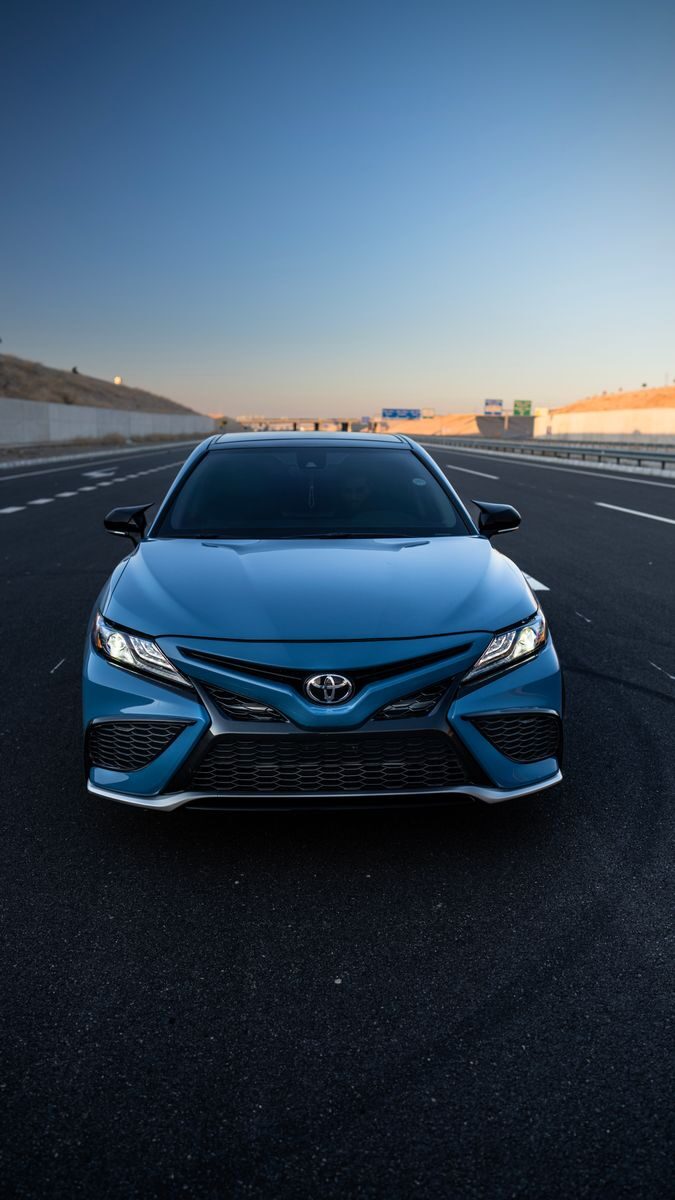
Where Is the Toyota Camry Made? Assembly Plants Explained
The Toyota Camry is made in different countries depending on the model year and the market it serves. In my view of automotive manufacturing, the key detail is that the Camry sold in the United States is built mainly in the United States, while other markets may receive cars from different production sources. The exact factory can vary by generation, model year, and destination.
The Camry is a mid-size sedan known for comfort, fuel economy, and long service life. Its production combines body stamping, robotic welding, paint work, engine or hybrid-system assembly, and strict quality checks. These steps help explain why the place of assembly matters, but the country alone does not determine how reliable a car will be.
If you are buying a used Camry, comparing build quality, or checking a hybrid model, it helps to know where the car was assembled and how to verify its origin. A few simple checks can tell you far more than a badge on the trunk.
Where the Camry Is Built for Each Market
The Camry is a global model, so its manufacturing history is not limited to one country. Production locations have changed as Toyota adjusted its factories to meet demand, improve efficiency, and support local markets.
For current models, the main distinction is between the North American hybrid, Asian-market versions, and older imported vehicles. A car’s model year and original destination are key clues when identifying its assembly plant.
The main manufacturing plants and markets
The United States is a major production base for the Camry Hybrid sold in North America. Toyota’s large vehicle plant in Kentucky has built Camrys since 1988, and its current production includes hybrid models.
Other factories serve selected overseas markets. The exact production mix can change, so an older Camry may have a different country of origin from a newer one of the same name.
The following overview separates current production from historical manufacturing activity.
| Country | Manufacturing role | Production context |
|---|---|---|
| United States | Major assembly base | Current Camry Hybrid production |
| Japan | Domestic manufacturing | Camry production at the Tsutsumi plant |
| Thailand | Regional vehicle production | Camry and hybrid models |
| China | Domestic-market production | Camry and hybrid versions |
| Australia | Historical production | Local production ended in 2017 |
| India | Hybrid manufacturing | Camry Hybrid production |
These countries do not necessarily supply every market today. Some entries describe historical production, while others reflect current or recent manufacturing activity.
For a used car, never assume that all vehicles with the same trim name came from the same factory. Always check the specific vehicle identification number, or VIN, and its original production records.
How Toyota Builds a Modern Camry Sedan
The assembly plant does much more than fit an engine into a body. A modern production line combines metal forming, precision welding, paint application, electrical installation, and final testing.
Each stage must meet set tolerances. A tolerance is the allowed range of variation in a part’s size or position. Tight tolerances help doors close smoothly, panels align, and moving parts work as intended.
Body stamping and robotic welding
The process often starts with large sheets of steel. Presses shape these sheets into doors, floor sections, roof panels, and other body parts.
Robots then weld many sections together. Welding joins metal through heat and, in some processes, pressure. Sensors and production checks help maintain consistent joint strength and body dimensions.
A strong body structure can improve crash protection and reduce unwanted movement between panels. It can also help prevent squeaks and rattles over rough roads.
Paint work and corrosion protection
After the body is assembled, it passes through cleaning and surface-treatment stages. Protective coatings help resist rust, while primer creates a suitable base for the topcoat.
Paint quality depends on surface preparation, coating thickness, curing temperature, and cleanliness. Dust or poor coating control can cause defects, so paint shops use controlled environments and inspection systems.
A well-protected body is especially valuable in places with heavy rain, high humidity, road salt, or salty coastal air. Still, regular washing and prompt repair of paint chips remain important.
Powertrain and final assembly
The powertrain is the group of parts that produces and delivers driving force. It includes the engine, transmission, and related components.
During assembly, workers and automated systems install the dashboard, seats, wiring, suspension, brakes, wheels, and powertrain. Hybrid models also need electric motors, battery components, power electronics, and high-voltage connections.
Final checks may include brake tests, wheel alignment, leak inspections, electronic diagnostics, and a controlled road test. These steps help catch faults before a car leaves the factory.
Does the Factory Affect Camry Build Quality?
The factory matters, but it is only one part of the quality equation. Toyota uses production standards, engineering specifications, and inspection procedures to help maintain consistency across its manufacturing network.
A vehicle assembled in one country is not automatically better than one built elsewhere. Design, materials, supplier quality, factory controls, maintenance, and past repairs all influence how a Camry performs over time.
Why factory standards matter
Manufacturers use quality control to check whether parts meet their required dimensions and performance levels. Some checks happen during production, while others occur after a vehicle is assembled.
For example, a door that does not align properly may point to a body assembly issue. A hybrid warning light may relate to an electrical fault, a sensor, or a battery system. Neither problem can be diagnosed from the assembly country alone.
What matters more than country of origin
When comparing two used Camrys, focus on their condition and service history. A car with regular oil changes and timely repairs may be a better purchase than a neglected example from a factory with a strong reputation.
Use the following comparison to guide an inspection rather than treating the manufacturing country as a quality score.
| Quality factor | Why it matters | What to check |
|---|---|---|
| Service history | Shows how well the car was maintained | Oil changes and repair records |
| Body condition | Helps reveal damage and rust | Panel gaps and underbody |
| Engine health | Affects power and long-term reliability | Leaks, noise, and smoke |
| Transmission | Controls power delivery | Smooth shifts and warning signs |
| Hybrid system | Supports fuel savings | Fault codes and battery health |
| Electrical systems | Operates key features | Warning lights and system tests |
A careful inspection is more useful than relying on a country-of-origin label. If the vehicle has been imported, verify that its documents, odometer reading, and service records agree.
How to Identify Your Camry’s Assembly Plant
The most reliable way to identify a specific car’s assembly origin is to examine its VIN and supporting records. The VIN is a unique 17-character code used to identify most modern road vehicles.
It is usually visible through the lower windshield or on a label attached to the driver’s door area. The exact label location can vary by model and market.
Read the VIN correctly
The first three VIN characters form the World Manufacturer Identifier, or WMI. This identifies the manufacturer and its assigned vehicle identification region, but it does not always tell you the final assembly plant by itself.
Other VIN characters provide vehicle-specific information. Depending on the manufacturer’s coding system and market, a particular character may identify the plant or model details.
Do not rely on a generic online VIN chart without confirming that it applies to the correct model year and market. A decoding tool designed for one market may not interpret every imported vehicle correctly.
Check the vehicle’s build label
A build label may list a production date, manufacturing information, or compliance details. The label’s format depends on the destination market.
For an imported vehicle, compare the VIN on the body with the VIN on the registration documents. Any mismatch deserves further investigation before you buy the car.
The next table summarizes the most useful identification checks.
| Check | Information it can provide | Important limitation |
|---|---|---|
| VIN decoder | Manufacturer and vehicle details | Plant details may be limited |
| Door-jamb label | Build or compliance information | Format varies by market |
| Registration papers | Registered vehicle identity | May not state the plant |
| Factory build record | Specific production details | Access may require dealer support |
| Import documents | Origin and shipment details | Records can be incomplete |
If the plant is still unclear, ask an authorized service center to check the VIN against its vehicle records. This is especially helpful when a car has been imported or its paperwork is incomplete.
Differences Between Camry Hybrid and Gas Models
The Camry’s powertrain choice affects how the car is assembled and how it should be inspected. A conventional gasoline model relies on an internal combustion engine, which burns fuel to create power. A hybrid combines an engine with an electric motor and a high-voltage battery.
The exact engine, transmission, and hybrid configuration depends on the model year and market. Not every country receives the same combination of features.
How hybrid assembly differs
A hybrid needs additional electrical hardware and control systems. These include the traction battery, inverter, electric motor, and electronic controls that manage energy flow.
The inverter converts electrical power between forms that the battery and motor can use. Regenerative braking also helps recover some energy during deceleration and sends it back to the battery.
These systems require careful assembly and specialized testing. High-voltage parts can be dangerous if handled incorrectly, so battery and inverter repairs should be left to trained technicians with suitable safety equipment.
What buyers should inspect
A used hybrid should be checked for warning lights, stored fault codes, cooling-system problems, and battery performance. The battery’s cooling air path should remain clear, as blocked airflow can increase heat and affect performance.
A gasoline model has fewer hybrid-specific components, but it still needs proper engine, transmission, brake, and cooling-system checks. Neither version should be judged by country of assembly alone.
The comparison below highlights the main differences buyers should consider.
| Feature | Gasoline Camry | Camry Hybrid |
|---|---|---|
| Main power source | Gasoline engine | Engine and electric motor |
| Energy storage | 12-volt battery | 12-volt and traction batteries |
| Braking | Friction brakes | Friction and regenerative braking |
| Special inspection | Engine and transmission | Engine, battery, and hybrid controls |
| Repair skills | General automotive skills | High-voltage training may be needed |
For a daily commuter, the hybrid may offer lower fuel use in slow traffic. However, purchase price, local repair support, battery condition, and driving habits should all factor into the decision.
How Camry Manufacturing Has Changed Over Time
The Camry has evolved from a conventional family sedan into a global model with gasoline and hybrid powertrains. As demand grew, Toyota expanded production outside its home market to serve customers closer to where they lived.
This shift helped reduce dependence on a single factory and allowed regional production to support local demand. It also meant that the same model name could represent cars built in different countries.
From early production to global assembly
Camry production began in Japan in the early 1980s. Overseas manufacturing expanded later, including production in the United States and Australia.
The Kentucky plant began producing the Camry in 1988. Australia also became an important production base, building the sedan from 1987 until local vehicle manufacturing ended in 2017.
Over the years, production arrangements changed as Toyota updated its product range and factory network. Earlier generations may therefore have a different manufacturing origin from current models.
Why production locations change
Automakers consider demand, labor skills, shipping costs, supplier access, factory capacity, and trade rules when deciding where to build a car. A factory may also need new equipment when production shifts from gasoline models to hybrids.
A new model generation can require changes to welding fixtures, assembly tools, battery handling, and quality tests. These investments help a plant produce the updated vehicle safely and consistently.
The following timeline highlights several important points in the Camry’s manufacturing history.
| Period | Manufacturing development | Why it matters |
|---|---|---|
| Early 1980s | Camry production began in Japan | Established the model |
| 1987 | Australian production began | Expanded overseas assembly |
| 1988 | Kentucky production began | Supported North American demand |
| 2009 | Australian Camry Hybrid production began | Expanded hybrid manufacturing |
| 2017 | Australian vehicle production ended | Changed the local supply model |
| 2016 onward | Camry production shifted to Kentucky from another US plant | Consolidated US production |
These dates describe key historical developments rather than every factory or market. Production plans can change as new generations arrive and regional demand shifts.
What Camry Buyers Should Know Before Buying
If you are shopping for a Camry, knowing its assembly country is useful, but it should not be your only deciding factor. Condition, accident history, service records, parts availability, and the quality of previous repairs are often more important.
An imported vehicle may also have equipment or specifications that differ from a locally supplied version. This can affect replacement parts, software features, safety equipment, and servicing needs.
Confirm the correct model specification
Start by checking the model year, trim level, engine type, and transmission. Two Camrys that look similar may use different components because they were built for different markets.
Ask for the service history and check whether any recalls or technical service campaigns apply. A recall is a manufacturer-led repair program for a specific safety or compliance issue.
Check local parts and repair support
Before buying an imported Camry, confirm that the correct filters, brake parts, suspension components, and electronic parts are available. Hybrid models may need specialist diagnostic equipment and trained technicians.
The following checklist can help you compare vehicles in a consistent way.
| Buying check | What good evidence looks like | Warning sign |
|---|---|---|
| Vehicle identity | Matching VIN on car and papers | Different VINs |
| Maintenance | Regular service records | Long unexplained gaps |
| Accident history | Clear inspection results | Poorly aligned panels |
| Engine and transmission | Smooth operation | Harsh shifts or leaks |
| Hybrid system | No active faults | Warning lights or overheating |
| Parts support | Confirmed local availability | Unavailable key components |
A pre-purchase inspection is worth the cost, especially for a used hybrid or a vehicle with an unclear import history. It can uncover faults that are hard to spot during a short test drive.
Frequently Asked Questions About Camry Production
These answers address common questions about factory origin, hybrid production, and how to check a specific vehicle.
Is every Toyota Camry made in the same country?
No. Camry production has taken place in several countries, and the origin depends on the model year and destination market. Current and historical production arrangements are not identical.
Are American-market Camrys built in the United States?
The current North American Camry lineup is hybrid, and Toyota’s Kentucky plant is a major production base for it. Always verify the origin of a particular vehicle through its VIN and production records.
Is a Japanese-built Camry more reliable?
Not necessarily. Reliability depends on engineering, component quality, assembly standards, maintenance, and how the car was driven. A well-maintained car can be a better choice than a neglected car from any manufacturing country.
Where are Toyota Camry Hybrid models made?
Hybrid Camrys have been manufactured in several countries. Current production includes the United States, while other markets have their own production arrangements. The exact origin depends on the model year and market.
How can I check where my Camry was assembled?
Start with the 17-character VIN on the vehicle and compare it with the registration documents. Use a decoder suitable for that model year, then confirm the factory details through manufacturer or dealer records if needed.
Does the assembly country affect resale value?
It can influence buyer preferences in some markets, but it is rarely the only factor. Mileage, service records, accident history, trim, condition, and parts availability often have a greater effect on resale value.
Was the Toyota Camry ever made in Australia?
Yes. Australian Camry production began in 1987 and ended in 2017. Vehicles sold there after local manufacturing ended were imported.
Final Thoughts on Toyota Camry Manufacturing
The Toyota Camry is a global sedan with a manufacturing history that spans several countries. For current North American models, Kentucky is a key assembly location, while other markets may receive vehicles from different production sources.
The most important lesson is simple: the country of assembly is useful information, but it is not a guarantee of quality or reliability. Check the VIN, confirm the model specification, review the maintenance history, and arrange a proper inspection before buying.
Whether you choose a gasoline model from an older generation or a newer hybrid, a well-maintained Camry with a verified history is generally a more sensible choice than one selected by its manufacturing country alone.